Menu
Kettering Yards: Sloped or Level Concrete Slab for Drainage
Concrete Slab Kettering
The selection of an appropriate drainage system is perhaps the most important decision made by contractors who install a concrete slab in Kettering, particularly given the region’s clay-based soil types and variability of weather patterns, which are expected to present homeowners with numerous challenges. Property owners of homes within the vicinity of the Boomerang Room and the surrounding area need to consider the slope specifications of their concrete slab as it pertains to water damage, foundation problems, and potential hazards to themselves and others. Contractors will recognize that their decision regarding whether or not to install a sloped or level concrete slab will be based upon the purpose of the installation, local building regulations, and specific site requirements. Freeze-thaw cycles in Ohio necessitate adequate drainage for both the durability and strength of concrete slabs. When property owners know drainage systems, they can be better equipped to make informed decisions relative to their investment and ensure that their outside living space functions properly.
The Science Behind Concrete Slab Drainage
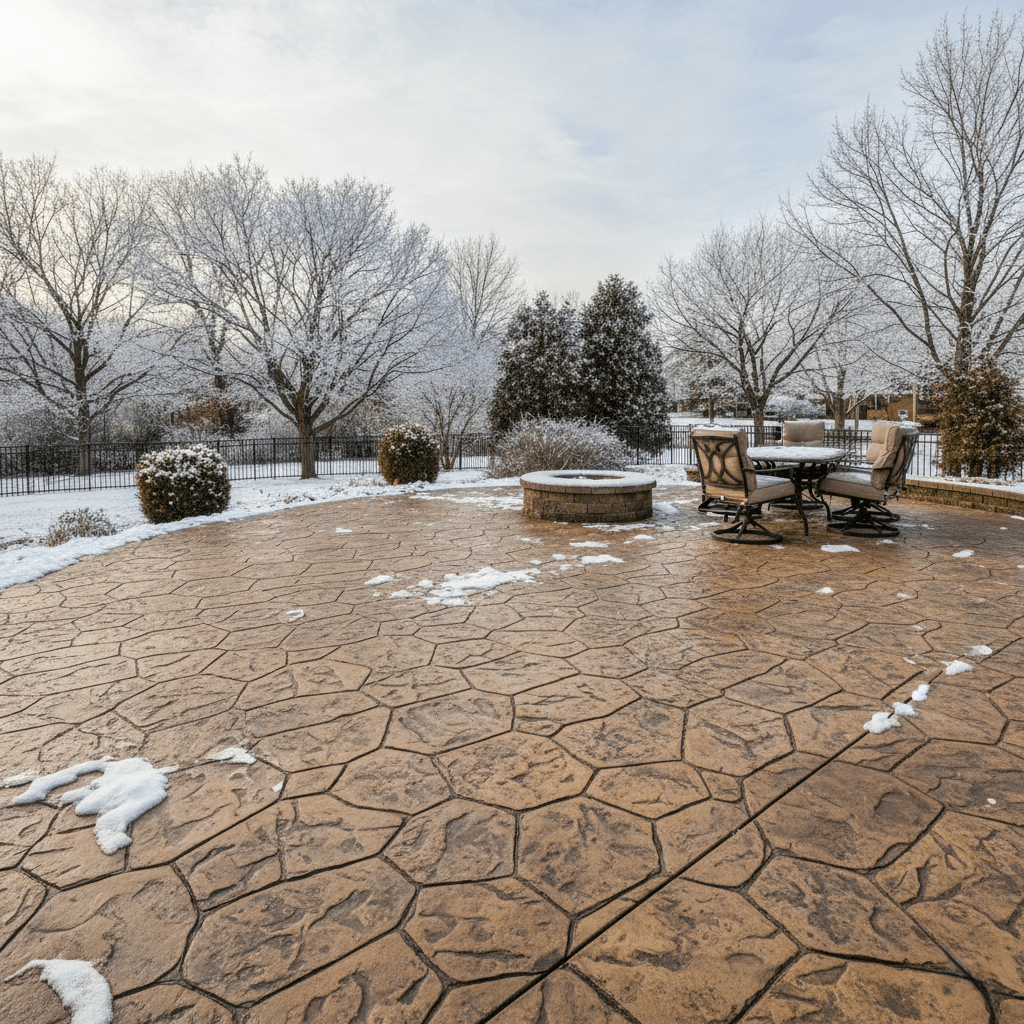
Concrete slab drainage is dependent upon the interaction of water with various types of surface configurations, specifically how the water will run off the surface of the concrete slab as it relates to the overall climate of Kettering, OH. Runoff off a sloping surface will take water away from a structure and will help to prevent puddling that can result in freeze-thaw damage when the weather turns cold in the winter months. Professionals who install concrete slabs know that having a slight slope on an installation results in improved drainage performance compared to a flat (level) installation.
Pooling of water on level concrete slabs results in several problems, such as ice formations, deterioration of the concrete, and hazardous conditions for people walking or driving on the surface. Water that pools on a flat concrete slab will seep into the pores of the concrete and, when the water becomes frozen, the expansion of the water causes the surface of the concrete to scale and eventually spall (break apart). In addition, the stagnant water provides a breeding ground for mosquitoes and other insects that will negatively impact the quality of life for residents living around SkateWorld of Kettering.
Soil Characteristics of Montgomery County
Clay-rich soils found in Kettering expand and contract with changes in the moisture content of the soil, which makes it even more important for the contractor to have effective drainage so the concrete slab remains stable. If there is poor drainage and water accumulates under the concrete slab, it will contribute to the soil moving under the slab, resulting in cracking and/or settling of the concrete slab. A professional contractor will consider the characteristics of the soil and design the installation to perform well over time and with a minimum of required maintenance.
Standard for Slope of Concrete Slab Installations
In the United States, the standard for the slope of exterior concrete slabs is 1/4 inch of slope per foot of length of the slab, which represents a 2% grade. This is the recommended slope for most exterior concrete slab installations to provide adequate drainage. Larger surfaces, such as driveways and patios, can usually be installed successfully with a reduced slope of 1/8 inch per foot if they are properly constructed with good finishing techniques. Contractors will evaluate all factors, including the texture of the surface, the type of activity on the surface, and the grades of adjacent areas, to determine what is the best slope for a particular installation near areas such as The Magic Castle.
Local Building Codes in Ohio
Ohio building codes dictate that impervious surfaces located within 10 feet of the foundation wall must slope away from the structure at a minimum of a 2% grade to protect against damage to the structure and foundation problems. By doing this, the building codes ensure that water will be drained from the site and that the structural integrity of the building will be protected. As such, professional contractors are familiar with local building code regulations and will incorporate a slope of a minimum of 2% into their installation designs.
When Would a Flat (Level) Concrete Slab Make Sense?
Flat (level) concrete slabs may be acceptable for very specific applications where there are alternative means of managing the drainage. Such applications would include interior installations, covered installations, or areas where there is a comprehensive drainage system in place. However, most exterior installations in Kettering would require a minimum amount of slope for maximum performance.
There are very few instances where a special application will require a flat (level) installation with a secondary means of draining the water. Special applications might include: industrial floors, equipment pads, and some forms of recreational surfacing. Even in these cases, the use of engineered drainage systems such as floor drains, perimeter collection systems, or surface treatments will usually be used to manage the water instead of using a slope to provide primary drainage.
Alternate Means of Providing Drainage
Contractors can provide alternate means of providing drainage on level surfaces, including linear drains, area drains, and permeable joint systems. All of these alternate means of providing drainage require extensive planning and regular maintenance to continue performing effectively. Generally speaking, installing a slope in the concrete slab provides more reliable long-term performance and less maintenance than utilizing alternate means of providing drainage for most residential applications.
Advantages of Installing a Sloped Concrete Slab
Installing a sloped concrete slab has many advantages for homeowners in Kettering, including superior water management, lower maintenance, and increased safety during wet and icy conditions. A sloped surface will direct water away from the structure and traffic areas, thus creating safer walkways and preventing the ice buildup that occurs in those areas during the winter months.
Benefits to Long-Term Performance
A sloped concrete slab installation will provide long-term benefits that include: reduced freeze-thaw damage, reduced efflorescence problems, and reduced maintenance costs over the life of the concrete slab. Homes throughout neighborhoods near Harrigan’s Tavern will benefit from a sloped installation that drains well and does not need additional drainage infrastructure or recurring maintenance interventions.
Aesthetic and Functional Benefits
A properly designed slope will be nearly unnoticeable to users while providing excellent drainage performance to maintain clean, dry surfaces. Professional contractors will ensure that the slope integrates well with the surrounding landscaping and architectural features. A properly designed slope will also increase the longevity of the concrete slab by reducing damage caused by water and reducing the frequency of repairs needed.
How to Calculate the Correct Slope for Your Project
Professional contractors will calculate the correct slope for a concrete slab using the rise-over-run method to express the slope as either a percent or an inch per foot. For example, a 10-foot patio that extends from a house would need to drop 2.5 inches from the starting point to achieve the standard 1/4 inch per foot slope recommendation for most exterior applications.
Regardless of whether you’re measuring the slope as a percent or inches per foot, the contractor will need to consider the existing grades, adjacent structures, and the location of the drainage outlets to ensure that the water will collect at an approved collection point. Contractors will utilize laser levels and sophisticated grading equipment to measure and achieve the precise slope that meets the specifications while accommodating site limitations and aesthetic requirements.
Site Specific Slope Adjustments
Kettering’s diverse topography may necessitate adjusting the slope of the concrete slab based on the natural drainage pattern of the site, the configuration of the lot, and the requirements of the local municipality regarding stormwater management. Contractors will assess each site individually to determine the optimal slope to work with the site conditions. Sites with steep slopes may necessitate the use of terracing or retaining walls to achieve the necessary grades while still being usable.
Common Drainage Issues With Level Slabs
Level concrete slabs will commonly experience drainage issues that will require continuous maintenance and may present safety hazards. Puddles of water will attract dirt and debris that will stain the surface of the concrete and create slippery conditions. In addition, the water that pools on the surface of the slab will penetrate the concrete, potentially causing internal damage that may not be evident until the concrete has deteriorated to a significant extent.
Wet conditions in the winter will make drainage issues worse, as puddles of water will freeze to create slippery ice patches that will present liability concerns for the owner of the property. Contractors will often suggest correcting the slope of an existing level slab to resolve drainage issues and to improve the long-term performance of residential properties in the vicinity of Adventure Reef.
Corrective Actions for Existing Level Slabs
Existing level concrete slabs may be corrected through one of three methods: slab jacking, installing an overlay, or replacing sections of the existing slab, depending on the condition of the slab and the budgetary requirements. Contractors will evaluate the condition of the existing slab and select the most cost-effective corrective action.
Prevention of drainage issues through the proper installation of a concrete slab will provide greater long-term value than the correction of drainage issues after the fact.
Installation Techniques Utilized by Professional Contractors
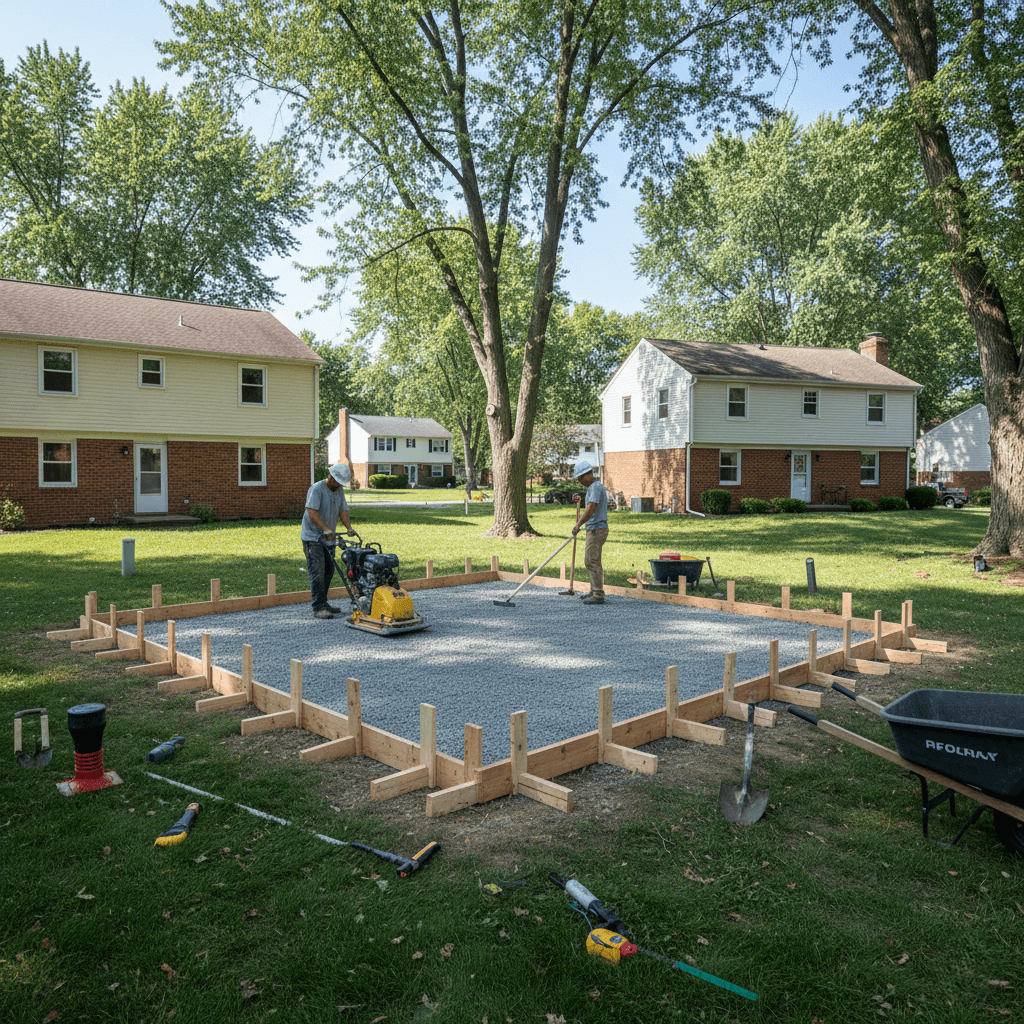
Professional contractors utilize specialized techniques to accurately establish a slope on a concrete slab while maintaining a smooth, uniform finish that functions properly for the intended use. The use of laser screeds and sophisticated forming systems allows contractors to produce consistent grades on large areas. Good finishing techniques will also help to eliminate any low spots or irregularities that could negatively impact the drainage capabilities of the concrete slab.
Preparing the Subgrade for Installation
Proper subgrade preparation will include establishing the correct base slope that will support the final grade of the concrete slab while providing a stable foundation condition. Contractors understand the importance of preparing the soil for the installation of a concrete slab and will take the necessary steps to prepare the subgrade to ensure that the installation of the concrete slab will be successful throughout the challenging soil conditions of Montgomery County.
Quality Control Measures Used During Construction
Professional contractors implement quality control measures to aensurethat the slope of the concrete slab is accurate during both the construction and finishing phases of the project. Regular elevation checks will be conducted to ensure that the specifications are met during the construction of the concrete slab. Upon completion of the project, a thorough inspection will be conducted to ensure that the drainage is functioning as specified and that the surface of the concrete slab is acceptable.
At Kettering Concrete Solutions, we understand the importance of designing a concrete slab with a suitable drainage plan for the community of Kettering. We will evaluate each project individually to determine the most suitable slope to maximize drainage while satisfying the needs of the project for the intended use of the slab and the conditions of the site.
LATEST POSTS