Menu
Pouring Concrete in Kettering: Weather, Formwork & Curing
Pouring Concrete Kettering
When it comes to successfully pouring concrete in Kettering, Ohio, one must consider how weather affects concrete placement and cure, as well as the interaction of a contractor’s formwork design and their ability to effectively cure (protect) concrete from environmental damage. Contractors who serve areas surrounding Southdale Shopping Center and local communities need to be able to understand the interplay between weather and concrete chemistry to deliver high-quality, durable concrete products that will perform well despite Ohio’s extreme temperature fluctuation, varying humidity levels, and precipitation. In addition to environmental conditions affecting concrete placement and curing, formwork is used by contractors to maintain the accuracy of the dimensions and surface quality of the concrete product. By having knowledge of how environmental conditions affect the chemical reaction of concrete, contractors are able to make informed decisions on the best time, materials, and protective measures to take when delivering concrete to customers in Kettering. Once a contractor has mastered these concepts, they can ensure a successful concrete project that will last for decades and endure Kettering’s freeze-thaw cycle for both residential and commercial use.
Optimal Weather For Pouring Concrete In Kettering
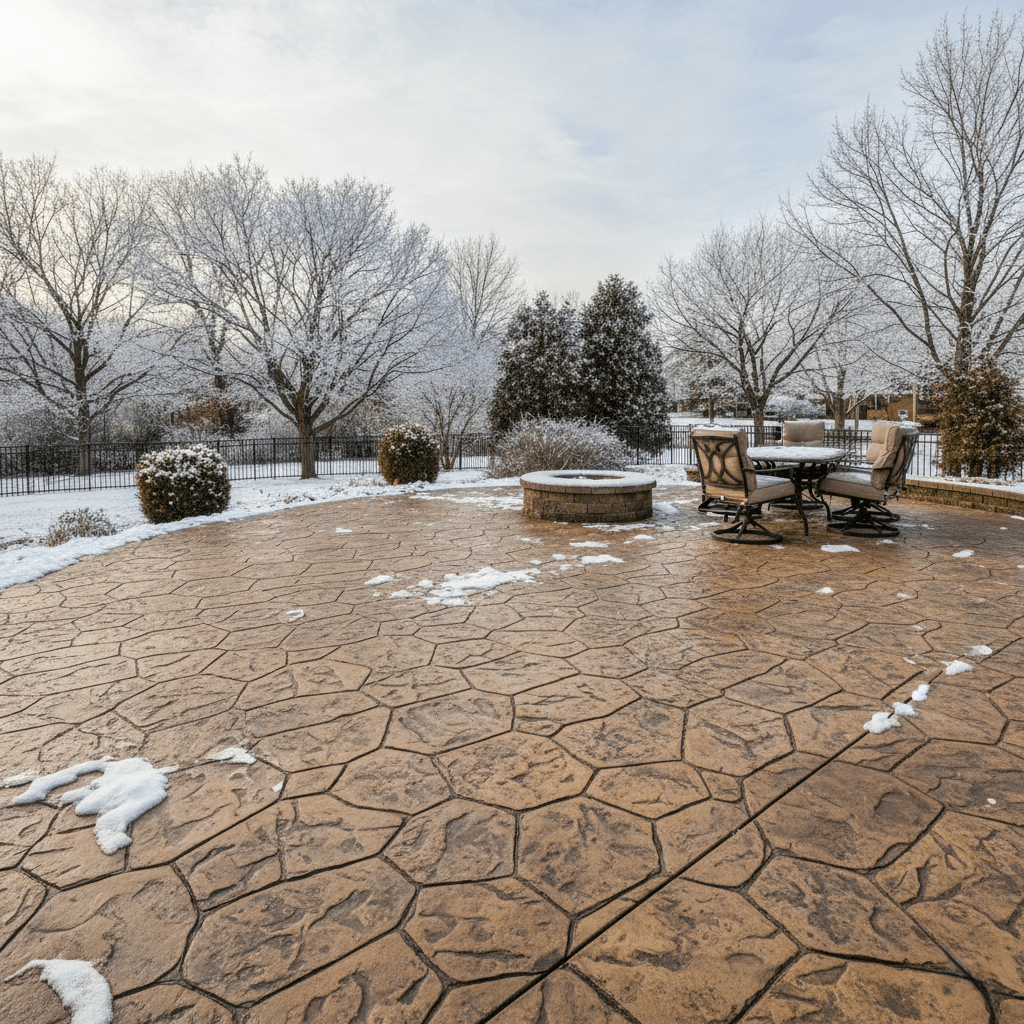
Weather conditions ideal for pouring concrete in Kettering range from 50°F to 85°F with humidity levels between 40% and 70%. The ideal humidity level is important as it has a positive effect on the hydration reaction (hydration is the chemical reaction that causes concrete to become strong). It also keeps the moisture content consistent, so the concrete does not lose moisture too fast, which would weaken the strength of the concrete. As a result, all contractors who pour concrete must monitor the forecast closely to find the best window of opportunity to pour concrete and to take advantage of weather conditions that will not harm the newly poured concrete.
Weather Extremes Create Major Challenges To Placing Concrete In Kettering
In addition to being an obstacle to the placement of concrete, extreme weather creates significant challenges for placing concrete in Montgomery County’s changing weather conditions. When temperatures rise above 90°F, the cement hydration process speeds up, creating less time for contractors to place and finish the concrete before the concrete becomes unworkable due to excessive evaporation of the surface moisture. This can lead to plastic-shrinkage cracking. Temperatures below 40°F cause hydration to slow down or stop completely, requiring contractors to add heat to the concrete and to protect the concrete from freezing temperatures until the concrete reaches a certain strength. Properties located close to the Fairfield Commons area benefit from contractors who understand the weather in their local areas and can plan to pour concrete based on that knowledge.
Humidity and Wind Affect the Quality of Concrete
When there is low humidity and windy conditions, there is a greater chance of rapid surface evaporation of the moisture on the surface of freshly placed concrete, increasing the chances of developing plastic-shrinkage cracks. Therefore, professionals use windbreaks and fogging systems to maintain a good moisture environment on the surface of the concrete during placement and finishing operations. On the other hand, high humidity slows the hydration process and, thus, the contractor will need to extend the finishing and protection periods to ensure the concrete is fully developed.
Strategies to Pour Concrete in the Hot Weather in Kettering
To pour concrete in hot weather in Kettering, specialized techniques are used to handle the accelerated hydration process and higher evaporation rates that affect the quality of the concrete. Professionals usually pour concrete during the cool hours of the morning, such as 6 am to 10 am, to avoid the hottest part of the day and the direct sunlight that affects the concrete. Chilling the water and adding ice to the mix reduces the temperature of the concrete by 10 to 15°F, giving the contractor more time to work with the concrete and improve the long-term strength of the concrete.
Professionals also use retarding admixtures and water-reducing admixtures to extend the working time of the concrete without compromising the ultimate strength of the concrete. Windbreaks, shade structures, and fogging systems are used to create a controlled microclimate around the freshly placed concrete to protect it from environmental stresses. Finally, completing the finishing process as quickly as possible and beginning to cure the concrete immediately is critical to avoiding the common problem of plastic-shrinkage cracking in the summer months in areas around Kettering Tower.
Methods to Protect Concrete in Heat
There are several ways to protect concrete from the heat. Evaporative cooling systems, reflective covers, and strategically placed shades help keep the temperature of the concrete reasonable during hot placements. Professionals have sprayers and evaporative retardants to help prevent rapid drying of the surface of the concrete. Monitoring the temperature of the concrete and the air temperature continuously during the placement process determines when protective measures should be implemented.
Placing Concrete in Cold Weather in Kettering
In order to properly hydrate and develop strength when temperatures drop to or below 40°F in Kettering, the process of placing concrete in cold weather requires a well-planned strategy to ensure adequate hydration and strength development. Professionals use heated enclosures, insulation blankets, and accelerating admixtures to maintain the desired temperature of the concrete during the critical early stages of hydration. If necessary, ground heating may be needed to prevent placing concrete on a frozen subgrade, which may result in settling or cracking of the subgrade.
Protective Measures Include:
- Heated enclosures that maintain the temperature of the concrete at 50°F or warmer for at least 48 hours after placement to ensure that the hydration reaction proceeds sufficiently to provide freeze-resistance.
- Insulated blankets and heated forms are used to provide cost-effective protection for smaller projects while protecting the workforce and promoting productivity.
- Professional contractors recognize that the concrete must reach a minimum strength before exposure to freezing temperatures to prevent permanent damage to the concrete in Montgomery County.
Preparing Sites for Winter Concrete Placement
Clearing snow and ice, thawing the ground, and pre-heating materials and equipment are site preparations for winter concrete placement that will enable successful placement. The materials and equipment that will be used for the placement and subsequent curing of the concrete are stored in heated storage facilities to prevent them from freezing and subsequently affecting the quality of the concrete.
As a precautionary measure, emergency heating equipment is kept on-site to provide supplemental heat in case of unexpected drops in temperature during the curing period.
Design and Construction Requirements of Forms
Accurate measurements of the concrete, as well as the ability of the forms to withstand the hydraulic pressure of the fresh concrete and the vibrational forces resulting from compaction tools, are important aspects of the design and construction of forms for concrete placement. Professionals design forms that are capable of resisting these types of forces, as well as the forces created by the weight of the workers and equipment used in the placement operation. Strong and durable forms produce a smooth surface and accurate dimensions for the finished product throughout the placement projects in the Kettering area.
Calculations for the Strength of Forms
Strength calculations for the forms consider the pressure exerted on the forms by the concrete, the rate of placement of the concrete, and the environmental conditions present during the placement process to determine the appropriate spacing and bracing for the forms. Due to the faster lateral pressure on the vertical forms resulting from the rapid placement of the concrete, the forms must be constructed to be stronger than those that are used for slower placements of the concrete. Professional contractors know that if the forms fail during the placement process, it creates hazardous working conditions and costly repairs in areas such as the Fraze Pavilion and the surrounding developments.
Materials Used for Form Construction
Steel, aluminum, and engineered wood each have different characteristics that make them beneficial for constructing forms for concrete placement based on the specific job requirements and whether or not the contractor plans to reuse the forms. Plywood and oriented strand board (OSB) are economical options for producing smooth surfaces and adequate strength for most residential applications. Release agents are used to prevent the concrete from bonding to the form and to make the forms easier to strip and preserve for future placements.
Fundamentals of Concrete Curing
Proper concrete curing maintains the right amount of moisture and temperature for the hydration process to occur and for the concrete to gain maximum strength during the critical 28-day period following placement. Professionals recognize that proper curing can increase the strength of the concrete by 50% or more when compared to inadequate curing of the concrete. Water curing, membrane curing, and steam curing are the three main curing methods, and each method has its own advantages/disadvantages depending on the job requirements and the environmental conditions present in Kettering.
First 72 Hours Critical Period of Curing
The first 72 hours are the most critical period of curing, as this is the time-frame when the concrete gains about 60% of its final strength. During this time-frame, maintaining the temperature of the concrete at 50°F or higher and minimizing moisture loss will promote proper hydration and reduce the risk of cracking. Professional contractors start the curing process immediately after completion of the finishing operations to ensure that the concrete is able to perform optimally.
Selection of Curing Method
Water curing provides very good results by ponding, spraying continuously, or using wet covering to maintain saturated surface conditions. Membrane curing with either liquid-based products or plastic sheeting is another option when water curing is impractical. Steam curing is an accelerated curing method that is used primarily for precast applications, but it requires specialized equipment and expertise.
Environmental Protection During Curing
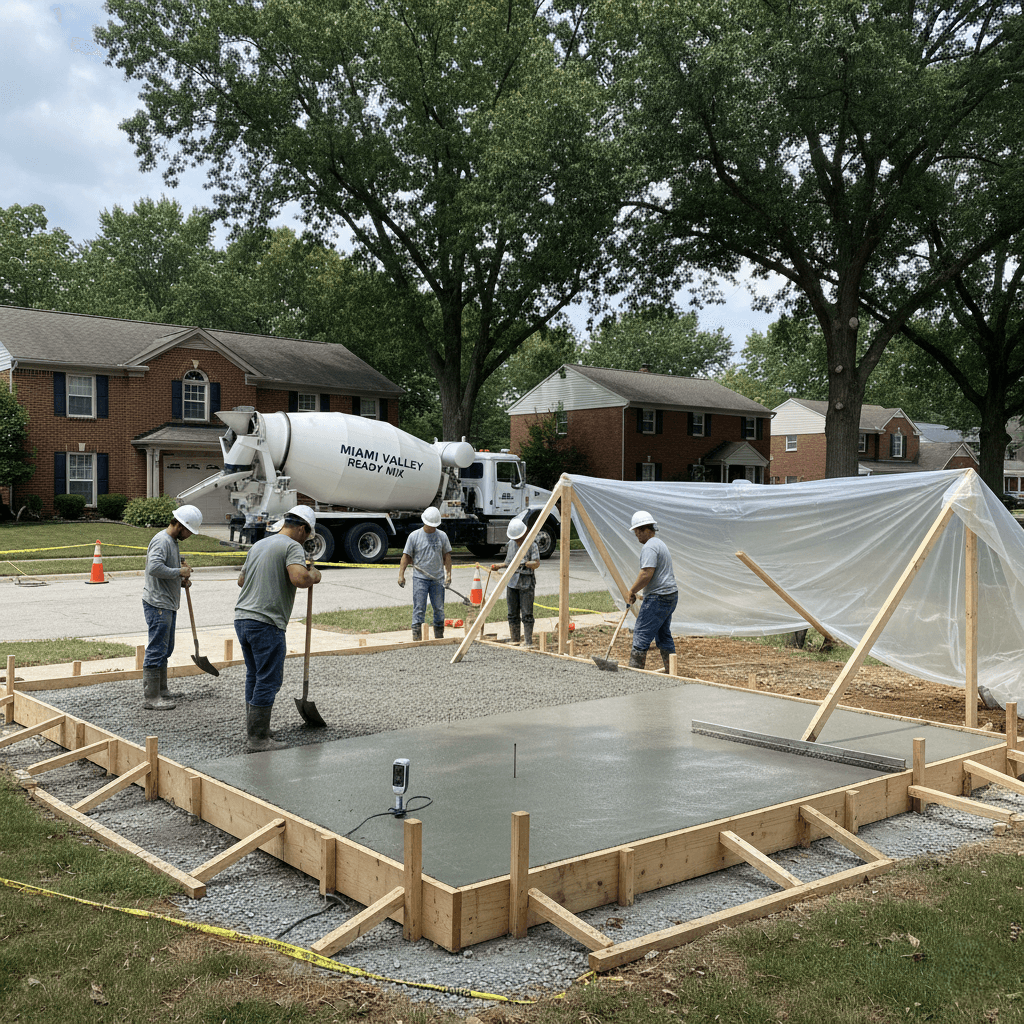
Protecting the environment during the curing process protects the newly placed concrete from precipitation, temperature fluctuations, and physical impact that can affect its long-term performance. Professional contractors use plastic sheeting, tarps, and temporary enclosures to protect the freshly placed concrete from rain, snow, and direct sunlight. By protecting the concrete, professionals are able to maintain the optimal curing conditions while preventing surface damage and promoting even strength development.
Temporary Enclosures Must Accommodate Thermal Expansion/Contraction, Maintain Adequate Ventilation, and Minimize Condensation Problems
Professional contractors find a balance between environmental protection needs and practical construction needs to allow workers to safely access the concrete surfaces to complete finishing and testing operations. Many property owners in the vicinity of Miami Valley Hospital benefit from professional contractors that provide total environmental protection to the concrete throughout the curing period.
Protection From Rain and Precipitation
Plastic sheeting, temporary roofs, and emergency protection systems prevent rainwater from diluting the surface of the concrete and causing scaling or dusting problems. Professional contractors maintain emergency protection equipment on-site to be prepared to address unforeseen precipitation events. Depending on the extent of the rain damage to the fresh concrete, surface texturing may be required.
Quality Control and Testing Procedures
Quality control of concrete placement involves a wide variety of activities, including temperature monitoring, slump testing, and strength testing to verify compliance with specifications. Professional contractors maintain extensive documentation of weather conditions, concrete temperatures, and curing processes for record-keeping purposes. Test results verify that the concrete performs according to expectations and indicate if there is a potential issue with the structural integrity prior to it becoming a concern.
Non-destructive testing methods, such as rebound hammers and ultrasonic testing, allow contractors to obtain early assessments of the strength of the concrete without damaging the structure. Professional contractors recognize the limitations of non-destructive testing and utilize independent testing laboratories for a comprehensive evaluation of the strength of the concrete. Documenting the quality of the installation provides liability protection for the contractor and demonstrates professionalism throughout the placement process in Kettering.
Documentation and Record Keeping
Documenting every aspect of the concrete placement process, including weather conditions, concrete temperatures, admixture dosages, and curing procedures, provides a wealth of information for quality-assurance and warranty purposes. Professional contractors photographically document the formwork, placement process, and protection measures. Maintaining a comprehensive file of documentation enables troubleshooting and facilitates optimization of future installations.
Scheduling of Projects Based on Seasonal Weather Patterns in Kettering
Project scheduling is completed in conjunction with seasonal weather patterns to provide optimal placement conditions and minimize the impact of weather-related issues. Spring and fall provide the most favorable conditions with mild temperatures and minimal weather variability. Professional contractors schedule large concrete placements during the most favorable placement windows and remain flexible for weather-related issues and protection concerns.
Contingency plans, including back-up protection equipment, alternative curing methods, and contingency schedules that account for weather-related issues, are maintained by professional contractors to accommodate unexpected weather-related challenges. Professional contractors utilize weather monitoring and cooperate with meteorological services to predict unfavorable weather-related conditions. Flexibility in scheduling enables contractors to coordinate optimal placement timing with project deadlines throughout Montgomery County.
Preparation of Equipment and Materials for Placement of Concrete
Preparation of equipment for seasonality includes equipment for cold weather, equipment for hot weather, and protective equipment for adverse weather. Professional contractors maintain an inventory-management system to provide adequate quantities of materials and equipment for placements. Maintenance programs are established to keep equipment operational under difficult weather conditions.
Kettering Concrete Solutions recognizes the importance of coordinating weather conditions, form designs, and curing processes to accomplish successful concrete placements throughout the community. Our staff of experienced professionals closely monitors weather conditions, maintains the proper equipment, and utilizes proven techniques to pour and finish concrete to meet the highest performance standards, regardless of the seasonal weather challenges and environmental conditions found in Montgomery County.
LATEST POSTS